

A complete guide to guitar neck profiles, including what neck profiles actually are; the different types of guitar neck shape; and the typical profiles for a variety of models and manufacturers…
Introduction To Guitar Neck Profiles
Guitar neck profile is an important factor in the overall feel of a guitar, and partly explains why licks that flow naturally from a vintage Telecaster can be quite different to those that spring from the frets of a modern superstrat.
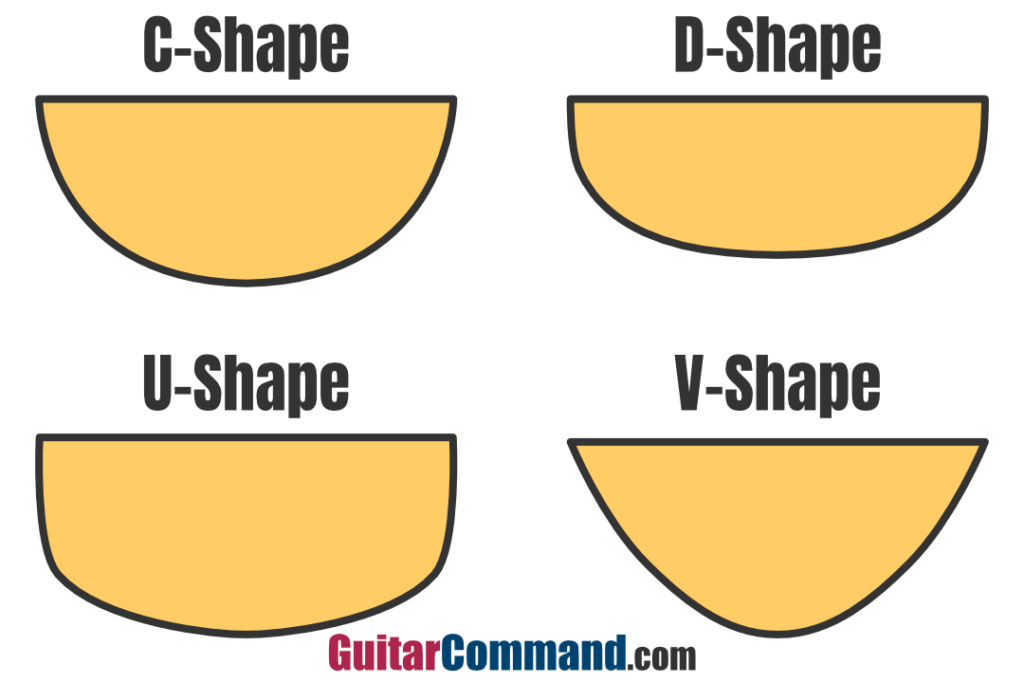
Guitar neck profile refers to the shape of the back of a guitar neck, as seen in cross-section across its width.
The back of the neck is where your thumb supports the pressure of the fretting fingers, and its shape therefore plays an important role in how comfortable and playable a guitar feels.
Guitar neck profile is often denoted with the letters C, D, U, and V – the shape of the letters representing the physical shape of the cross-section of a guitar’s neck. (You’ll find out more about these common neck shapes further down the page.)
Neck profile is just one of the many factors that determine the overall feel and sound of a guitar. You can find out more about the different aspects of a guitar neck – including scale length, radius, width, and more – on this page: Complete Guitar Neck Guide
Ad – Love Guitars? Check out the Ultimate Guitar Book, packed with guitar photos and info.

- Tony Bacon (Author)
- English (Publication Language)
- 03/06/2026 (Publication Date) - Paw Prints 2008-06-26 (Publisher)
Which Guitar Neck Shape Is Best For You?
Different profiles can change how the neck sits in the player’s hand, influencing grip, thumb placement, technique, and ultimately, the notes themselves.
As a general rule, thinner, flatter profiles are often preferred by players who favor fast lead playing, while thicker profiles can feel more supportive for rhythm or chord work. Smoother, rounded fretboards are good all-rounders, which is why S-style guitars often have this type of neck shape.
Common Guitar Neck Profiles

Certain guitar neck profiles are often associated with specific manufacturers, guitar models, and historical eras.
For example, vintage 1950s guitars from companies like Fender and Gibson are known for having thicker U profiles, while modern instruments from brands such as Ibanez and ESP frequently use very thin, flat D-profile necks designed for fast, precise playing.
The classic C-shaped profile, as seen on most modern “S-style” and “T-style” guitars, is both comfortable and suited to a wide range of playing styles, and is the most common guitar neck profile.
C vs D vs U vs V Neck Profiles
The most common neck profiles are C, D, U, and V shapes, the shape of the letters loosely corresponding to the physical profile of the guitar neck.
For example, a C-shape neck has a uniformly rounded shape (like the letter C), and a V-shape neck has a sharper, more triangular profile (like the letter V).
The letters offer a general description of the neck profile, with each manufacturer having its own take on these general shapes.
C Profile
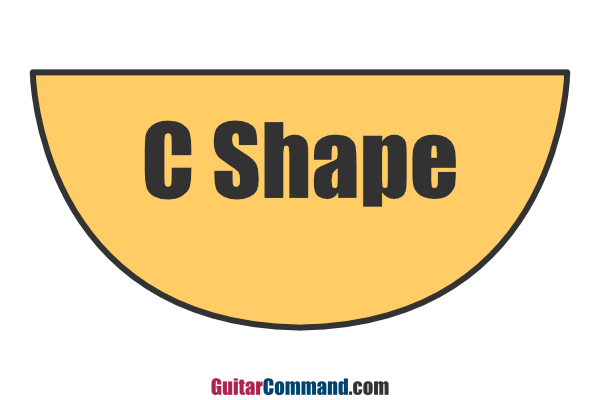
The C-shaped neck is the most widely used guitar neck profile. It has a smooth, rounded, contour that suits most players and styles.
The Fender Stratocaster is one of the most widely known guitars with a C-shaped neck profile. Fender’s “Modern C” shape – a slightly flatter take on the traditional C-profile – is found on the Fender Standard and Player II Stratocasters, whereas a “Deep C” profile is seen on the Fender American Professional II Stratocaster.

Many modern versions of the Fender Telecaster also feature C-shaped necks; the “Modern C” shape featuring on the company’s Standard and Player II Telecaster models, and the “Deep C” profile featuring on American Professional II Telecaster models.
Gibson’s SlimTaper profile, which resembles a thin C shape, is found on many Les Paul and SG variants. This profile provides a fast feel and is well suited to lead playing. The company’s Vintage ’50s Neck profile is a chunky C-profile that fills the hands and complements a heavy Les Paul body.
The “Pattern Thin” and “Pattern Regular” profiles found on PRS guitars feature are both variations on the classic C profile.
D Profile
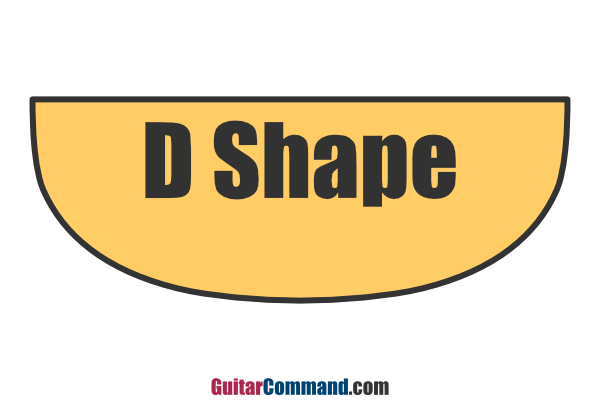
A D-shaped neck profile is typically thin with flatter shoulders, giving the back of the neck a slightly flatter feel than a C profile. This shape is often associated with modern “fast” neck designs used for technical playing.

D-shaped necks are most often found on modern superstrat-style guitars, especially those designed for rock and metal players, where a flatter neck profile helps facilitate fast playing and wide finger stretches.
Jackson’s Speed Neck profile, as seen on the company’s Soloist models and Ibanez’s various Wizard profiles, found on the company’s RG models, are variations on the D-shape.
U Profile

U-shaped necks (sometimes known as “baseball bat necks”) are thicker and chunkier, delivering a substantial vintage feel and support for string bending and chord work. They’re often favored by blues, classic rock, and vintage purists.
Note, however, that ESP – known for their performance-oriented, modern designs – use a “Thin U” profile on their electric guitars. This profile is more rounded than a D, but fuller in the palm than a C.
Traditional, deep U-profile necks are found on many vintage Stratocasters and Telecasters, and their modern reissues, such as this American Vintage II 1951 Telecaster:
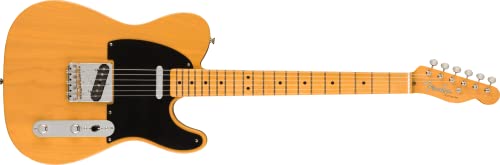
- 2 Single-coil Pickups - Butterscotch Blonde
- Solidbody Electric Guitar with Ash Body
- Maple Fingerboard
- Maple Neck
V Profile
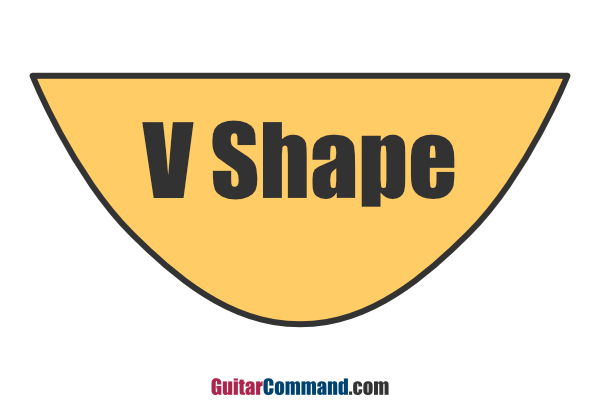
V-shaped profiles are more sharply-tapered towards the center of the back of the neck. Some players find that this helps anchor the thumb of the fretting hand – great for those players who perform a lot of string bends.
This style of neck is also said to be more comfortable for guitarists who rest their thumb over the edge of the fretboard.
A well-known example of a guitar with a V-shaped neck profile (albeit a “Soft V”) is Fender’s Eric Clapton Artist Stratocaster:

- Soft v-shaped neck and vintage frets offers the feel and vibe of a vintage Strat.
- Three Vintage Noiseless pickups deliver the full range of vintage Strat tones with absolutely no 60-cycle hum.
- The on-board 25db mid-boost is perfect for propelling tube amps into glorious, singing violin-like sustain.
- Vintage Tweed Case, Strap, and Cable included.
Guitar Neck Profiles – Conclusion
In terms of actual playability, the differences between guitar neck shapes are subtle; you’ll still be able to shred on a vintage, mid-50’s soft V profile, and you’ll still be able to play blues on a modern, thin D-shape neck.
That being said, different neck profiles have evolved for a reason. If you play fast, technical progressive metal, your fingering might feel more streamlined and accurate on a slim, D shape guitar neck. If you play classic rock, your string bends may feel more comfortable with a deep, U profile.
Ultimately, neck profile is highly personal: the “best” shape is the one that brings out the best in your playing and allows you to play comfortably for extended periods.
You can find out about other aspects of a guitar neck, such as radius, scale and width, on this page: Complete Guitar Neck Guide
